

Fast recall is an important part of maths learning in UK primary schools. Many children in Key Stage 1 (KS1) and Key Stage 2 (KS2) need regular practice to help them remember number facts quickly and accurately.
The phrase “Hit the Button” is often used to describe a type of fast-recall maths practice. It focuses on answering number questions quickly, such as times tables, number bonds, and division facts.
This article explains what this kind of practice involves, why it matters, and how parents and teachers can use it in a balanced way at home and in the classroom.
Why Fast Recall Matters in UK Primary Maths
In the UK National Curriculum, children are expected to build confidence with number facts as they move through primary school.
Fast recall supports children because it helps them:
- Work more quickly in lessons
- Solve problems with less confusion
- Focus on reasoning instead of counting
- Feel more confident in maths
When basic facts become automatic, children can use their thinking for harder tasks.
What Does “Hit the Button” Mean in Maths?
“Hit the Button” usually refers to quick-fire maths questions where children answer as fast as they can.
This may include:
- Times tables questions
- Number bond challenges
- Doubling and halving
- Division facts
- Quick addition or subtraction
The main aim is to strengthen memory and speed with key number facts.
This type of practice is often done in short bursts.
How Fast-Recall Practice Fits into KS1 and KS2
Fast recall is used differently depending on a child’s age and stage.
KS1 (Ages 5–7)
In KS1, children focus on simple facts, such as:
- Number bonds to 10 and 20
- Counting in 2s, 5s, and 10s
- Simple doubling (e.g., double 3 = 6)
The goal is accuracy first, not speed.
KS2 (Ages 7–11)
In KS2, children move on to more complex facts, including:
- Times tables up to 12 × 12
- Related division facts
- Mental addition and subtraction
- Fractions linked to tables (e.g., ½ of 12)
By Year 4, children are expected to know all multiplication tables up to 12.
Key Skills Developed Through Fast Recall
Fast-recall activities support several important maths skills.
These include:
- Fluency: quick and accurate calculation
- Memory: storing key number facts
- Confidence: reducing hesitation
- Mental maths ability: working without written methods
Fluency is one of the main aims of the National Curriculum.
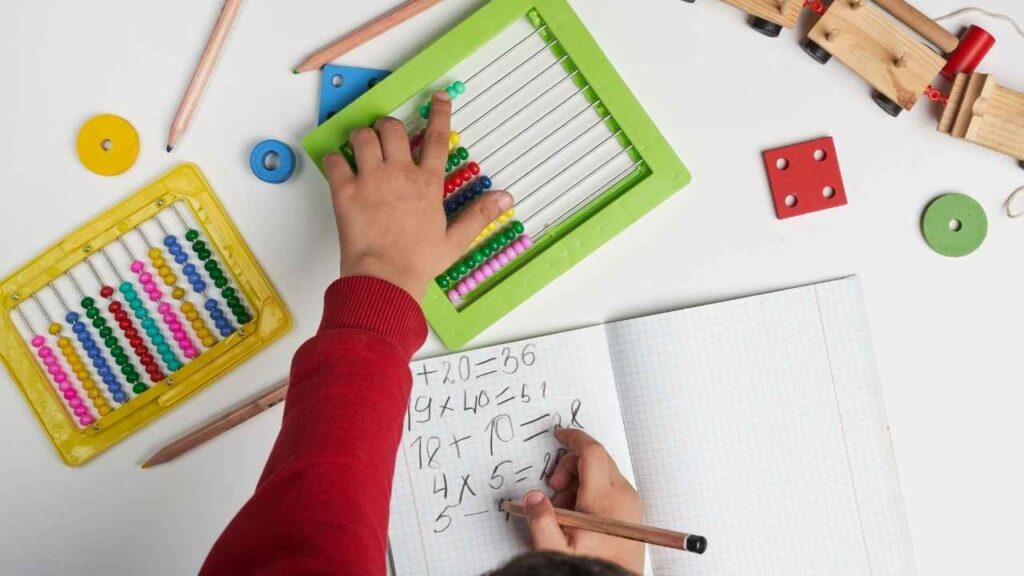
Common Examples of Fast-Recall Questions
Fast-recall practice usually focuses on core facts children need often.
Here are some typical examples:
Number Bonds
- 7 + 3 = 10
- 15 + 5 = 20
Times Tables
- 6 × 4 = 24
- 9 × 7 = 63
Division Facts
- 24 ÷ 6 = 4
- 56 ÷ 7 = 8
Doubling and Halving
- Double 8 = 16
- Half of 20 = 10
Typical Fast-Recall Expectations by Year Group
The table below shows broad expectations across primary school.
| Year Group | Key Recall Focus |
|---|---|
| Year 1 | Bonds to 10, counting in 2s and 10s |
| Year 2 | Bonds to 20, 2, 5, 10 tables |
| Year 3 | 3, 4, 8 tables, mental addition facts |
| Year 4 | All tables up to 12 × 12 |
| Year 5 | Quick recall for fractions and larger facts |
| Year 6 | Fluent recall to support SATs problem-solving |
Children may progress at different speeds, and practice should match their needs.
Benefits of Short, Regular Practice
Fast-recall practice works best when it is short and consistent.
Benefits include:
- Helps facts stick over time
- Improves mental calculation
- Builds readiness for problem-solving
- Supports classroom learning
Many teachers use quick recall as a warm-up at the start of maths lessons.
Limitations and Common Challenges
Fast recall is helpful, but it is not the only part of maths learning.
Some limitations include:
- Speed can cause anxiety for some children
- Memorising without understanding may lead to confusion
- Children may guess rather than think carefully
- Practice must be balanced with deeper learning
Children still need time to explore concepts, use resources, and explain their reasoning.
Fast recall should support understanding, not replace it.
Using Fast Recall at Home
Parents can support learning with calm, simple routines.
Helpful approaches include:
- Practising for 5 minutes a day
- Focusing on one set of facts at a time
- Using praise for effort, not just speed
- Keeping sessions relaxed and pressure-free
Simple Home Activities
- Saying number bonds aloud
- Quick table questions during car journeys
- Flashcards used gently
- Doubling games with small numbers
Short practice is usually more effective than long sessions.
Using Fast Recall in the Classroom
Teachers often include fast recall in daily maths lessons.
This may be done through:
- Starter questions on the board
- Partner quizzes
- Whole-class chanting of tables
- Timed challenges with personal targets
Good Practice in Schools
Effective fast recall in school should:
- Be inclusive
- Avoid embarrassment
- Focus on progress over competition
- Link facts to real understanding
Children benefit most when recall work is part of a wider maths curriculum.
Can Interactive or Game-Based Practice Help?
Interactive activities can support recall when used carefully.
Digital quizzes or maths games may help because they:
- Provide instant feedback
- Encourage repetition
- Make practice more engaging
However, they also have limits:
- Screen time should be managed
- Games should not replace teaching
- Children still need discussion and explanation
Game-based recall works best as a small part of regular learning.
Practical Tips for Balanced Fast-Recall Learning
Fast recall should always be combined with understanding.
A balanced approach includes:
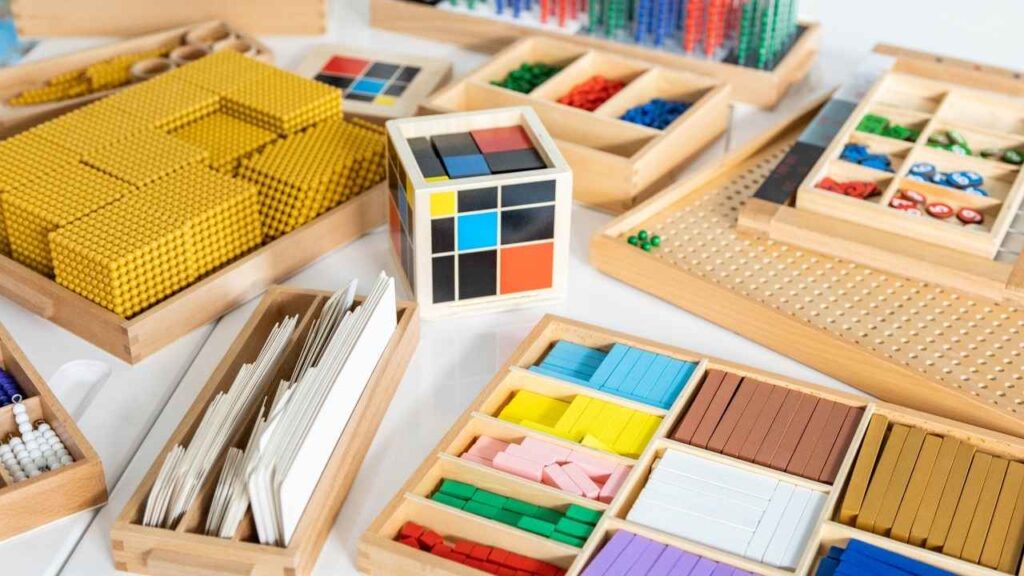
- Concrete resources (counters, cubes)
- Visual models (number lines, arrays)
- Reasoning tasks (“How do you know?”)
- Word problems and real-life maths
Example Balance
| Practice Type | Purpose |
|---|---|
| Fast recall | Build fluency and memory |
| Problem-solving | Apply skills in context |
| Reasoning | Explain and justify thinking |
| Visual methods | Support understanding |
Children need all of these to become strong mathematicians.
Key Takeaways
- “Hit the Button” refers to fast-recall maths practice.
- It supports fluency with number bonds, tables, and key facts.
- KS1 focuses on simple bonds and counting patterns.
- KS2 builds up to full multiplication and division recall.
- Short, regular practice works best.
- Speed should not create stress or replace understanding.
- Recall activities are most effective when balanced with reasoning and problem-solving.
Frequently Asked Questions (FAQ)
1. Is fast recall the same as learning times tables?
Fast recall includes times tables, but also number bonds, division facts, and mental maths skills.
2. Should children be timed during recall practice?
Timing can help some children, but others may feel pressured. Personal progress is more important than speed.
3. How often should children practise recall?
Small daily practice (around 5 minutes) is usually enough when done regularly.
4. What if a child struggles to remember facts?
Children may need more visual support, repetition, and time. Understanding should come before memorising.
5. Can recall games replace written maths work?
No. Games can support practice, but children still need written methods, reasoning, and problem-solving activities.
Conclusion
Fast-recall practice, sometimes described as “Hit the Button” maths, is a useful way to build fluency with key number facts in KS1 and KS2. It helps children answer basic questions quickly, freeing up mental space for harder tasks later.
However, recall work should always be balanced with deeper understanding, reasoning, and real problem-solving. When used calmly and regularly, fast recall can be a valuable support for both home learning and classroom teaching.
