
If your child has ever typed “hit the button” into a search bar, chances are they’re looking for a faster, more fun way to learn their times tables — and you’re in exactly the right place.
Times tables are one of the most important skills in primary maths. Once a child truly knows them, everything else — division, fractions, percentages, even algebra — becomes dramatically easier.
This guide is written for parents, teachers, and children in Key Stage 1 and Key Stage 2 (ages 5–11). Whether your child is just starting their 2 times table or struggling to recall 7 × 8 under pressure, this article will walk you through everything clearly and simply.
By the end, you’ll understand what times tables actually are, why they matter so much, how to learn them step by step, and how interactive games like Hit the Button make practice genuinely enjoyable — and effective.
Let’s start from the very beginning.
What Are Times Tables?
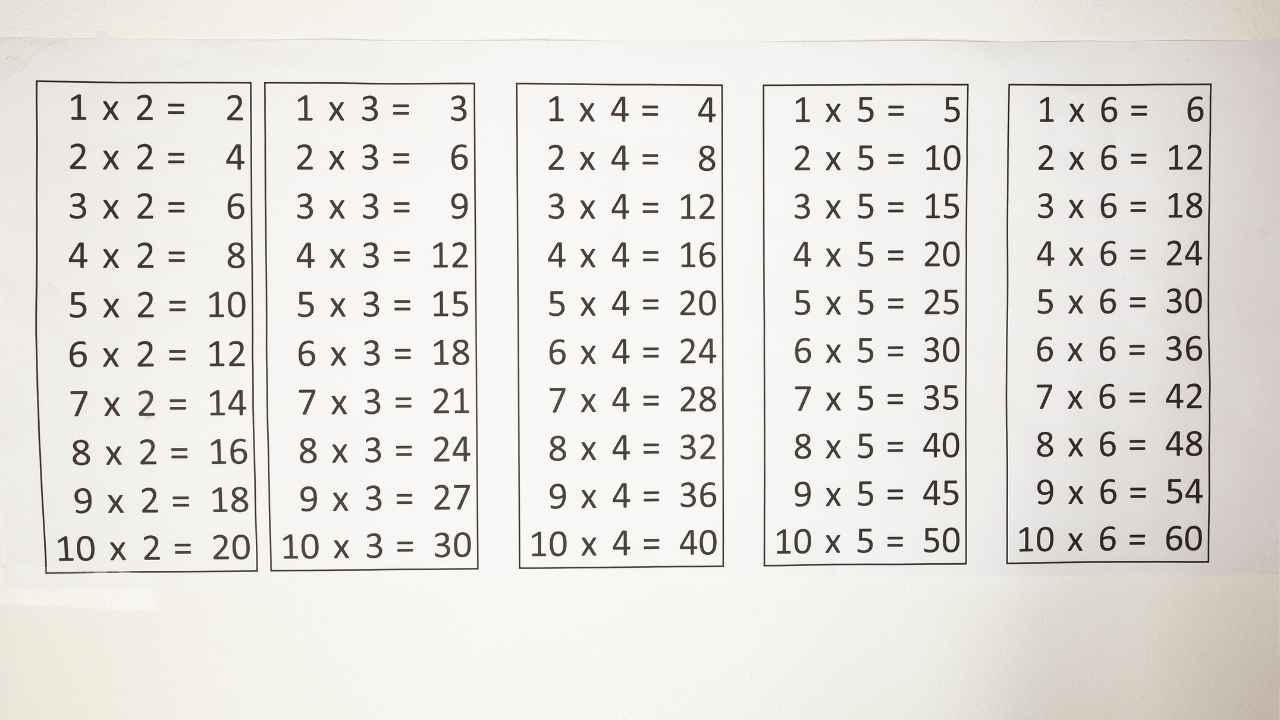
A times table is a list of multiplication facts for a specific number.
For example, the 3 times table looks like this:
| Multiplication | Answer |
|---|---|
| 1 × 3 | 3 |
| 2 × 3 | 6 |
| 3 × 3 | 9 |
| 4 × 3 | 12 |
| 5 × 3 | 15 |
| 6 × 3 | 18 |
| 7 × 3 | 21 |
| 8 × 3 | 24 |
| 9 × 3 | 27 |
| 10 × 3 | 30 |
| 11 × 3 | 33 |
| 12 × 3 | 36 |
In simple terms, multiplication is repeated addition. So 4 × 3 just means “four groups of three” — or 3 + 3 + 3 + 3 = 12.
For a child: Imagine you have 4 bags, and each bag has 3 apples. How many apples altogether? That’s 4 × 3 = 12.
Times tables take this idea and help children memorise the answers quickly — so they don’t need to count on their fingers every time.
Why Times Tables Matter So Much
In School (KS1 & KS2)
The National Curriculum in England expects children to:
- Know their 2, 5, and 10 times tables by the end of Year 2 (age 7)
- Know all times tables up to 12 × 12 by the end of Year 4 (age 9)
In Year 4, children sit the Multiplication Tables Check (MTC) — a short online test where they must answer 25 questions in around 25 seconds each. Speed and accuracy both count.
Without solid times table knowledge, children can struggle with:
- Long multiplication and division
- Fractions and simplifying
- Area and perimeter in geometry
- Problem-solving word problems
In Real Life
Times tables pop up constantly — working out the cost of 6 items, splitting a pizza, calculating journey times, or doubling a recipe. Children who know their tables feel confident, not stuck.
Brain Benefits
Research in mathematics education consistently shows that automatic recall of multiplication facts frees up working memory. In plain terms: when a child doesn’t have to think about 6 × 7, their brain has more space to focus on the harder parts of a problem.
Confidence builds quickly too. Children who know their tables tend to enjoy maths more — it’s that simple.
Step-by-Step Guide to Learning Times Tables
Step 1: Start With the Easy Tables
Don’t try to learn everything at once. Begin with the tables that have clear patterns.
The 10 times table — just add a zero: 3 × 10 = 30, 7 × 10 = 70.
The 2 times table — these are all even numbers: 2, 4, 6, 8, 10…
The 5 times table — answers always end in 0 or 5: 5, 10, 15, 20…
Mini tip: Once a child knows the 2s, 5s, and 10s, they already know over 30 multiplication facts. That’s a huge head start.
Step 2: Spot the Patterns
Every times table has a rhythm. Teaching children to notice patterns builds understanding rather than just rote memory.
The 9 times table trick:
- The tens digit goes up: 09, 18, 27, 36…
- The units digit goes down: 9, 8, 7, 6…
- The digits always add up to 9: 1+8=9, 2+7=9, 3+6=9 ✓
Example: 9 × 6 = 54 → 5 + 4 = 9 ✓
The 11 times table (up to 9):
- Just double the number: 11 × 3 = 33, 11 × 7 = 77
Mini tip: Ask children “what pattern do you notice?” rather than just telling them. This makes the learning stick far longer.
Step 3: Build Up to the Tricky Ones
The tables children find hardest are usually the 6s, 7s, and 8s — because they have fewer obvious patterns.
The most forgotten fact in primary maths? 7 × 8 = 56.
A memory trick: 5, 6, 7, 8 → 56 = 7 × 8. Say it like a little chant: “Five six seven eight — fifty-six is seven times eight!”
Once a child is confident with the easier tables, tackle 6, 7, 8, and 9 with deliberate daily practice — just 5 minutes a day works wonders.
Mini tip: Use commutative law to reduce the load. 6 × 7 is the same as 7 × 6. If you know one, you know both.
Easy Tricks and Shortcuts
Here are some of the best memory hacks for times tables:
The 2s: Count in 2s. Clap hands, jump, tap feet — make it physical.
The 4s: Double the 2s answer. 2 × 6 = 12, so 4 × 6 = 24.
The 8s: Double the 4s answer. 4 × 6 = 24, so 8 × 6 = 48.
The 3s: Add the digits of the answer — if they add up to 3, 6, or 9, it’s in the 3 times table. For example: 27 → 2+7=9 ✓
The 6s: When 6 is multiplied by an even number, the answer ends in the same digit. 6 × 2 = 12, 6 × 4 = 24, 6 × 6 = 36.
Square numbers: 3 × 3, 4 × 4, 5 × 5 — these are worth memorising separately. Children often find them easier to remember than other facts.
Common Mistakes (And How to Fix Them)
1. Learning in order, but not out of order
Why it happens: Children chant “1×7=7, 2×7=14…” but can’t jump to 6×7 without going through the whole sequence. Fix: Practise random recall, not just sequential recitation.
2. Confusing 6×8 and 8×6
Why it happens: Children don’t yet understand commutativity. Fix: Show that both equal 48. Reinforce regularly: “The order doesn’t change the answer.”
3. Getting 7×8 and 6×9 mixed up
Why it happens: Both equal 54 and 56 — very close answers. Fix: Use distinct memory tricks for each. “Seven eights are 56” paired with the 5678 rhyme above.
4. Rushing before they’re ready
Why it happens: Pressure to be fast before facts are secure. Fix: Accuracy first, speed second. Speed comes naturally with repetition.
5. Skipping the difficult tables
Why it happens: Children avoid what they find hard. Fix: Identify the exact facts they don’t know and drill those specifically — not the whole table every time.
6. Only practising at school
Why it happens: Maths feels like a school-only subject. Fix: Five minutes of practice at home — in the car, at breakfast, before bed — makes an enormous difference over weeks.
7. Losing confidence after mistakes
Why it happens: Children feel embarrassed when they get something wrong. Fix: Normalise mistakes as part of learning. Celebrate improvement, not just correct answers.
Fun Ways to Practise Times Tables
At Home
- Times table snap — write facts on cards and play a matching game
- Beat the timer — try to say a full table before the timer runs out
- Times table songs — YouTube has brilliant songs for each table; children absorb them quickly
- Whiteboard practice — many children prefer writing on a mini whiteboard; it feels less permanent than paper
- Staircase challenge — recite one table on the way up the stairs, another on the way down
In the Classroom
- Mixed-up tables grids — fill in a grid where the rows and columns are jumbled
- Multiplication bingo — call out a multiplication question; children mark the answer
- Rapid fire rounds — short verbal quizzes at the start of a lesson (2–3 minutes only)
- Peer teaching — ask a child to explain how they worked out a fact; this deepens understanding
In Real Life
- “We need 4 bags of carrots — each bag has 6 carrots. How many altogether?”
- “There are 3 shelves and 8 books on each — how many books?”
- Cooking, shopping, and travel all provide natural multiplication moments.
Practise Times Tables With Hit the Button
One of the best ways to build both speed and accuracy is through regular timed practice — and that’s exactly what Hit the Button maths game is designed for.
Hit the Button is an interactive maths game where questions appear on screen and children must tap or click the correct answer as quickly as possible. It’s used by thousands of teachers and parents across the UK, and it mirrors the format of the Year 4 Multiplication Tables Check.
Why It Works So Well
Speed under pressure: Children learn to recall facts quickly — not just when they have time to think, but in a pressured, timed environment. This is exactly the skill needed for the MTC.
Targeted practice: Players can choose a specific times table to focus on, or mix them up for a real challenge. This means children can target their weakest facts rather than practising what they already know.
Instant feedback: Every correct or incorrect answer is shown immediately. The brain learns fastest when it receives immediate feedback — this is well-supported in cognitive science.
It feels like a game: Children don’t always realise they’re drilling maths facts. The game format keeps them engaged for longer than a worksheet ever would.
Builds genuine confidence: As scores improve, children can see their progress. This visible improvement is one of the most powerful motivators at primary age.
Try the Hit the Button times tables game on this site — start with the table your child finds hardest and aim to beat your own score each time.
Practice Questions
Try these questions — answers are at the bottom!
Beginner:
- 2 × 5 = ?
- 10 × 3 = ?
- 5 × 4 = ?
Intermediate: 4. 6 × 7 = ? 5. 8 × 4 = ? 6. 9 × 6 = ? 7. 7 × 3 = ?
Trickier: 8. 12 × 8 = ? 9. 11 × 9 = ? 10. 7 × 8 = ? 11. 6 × 12 = ? 12. 9 × 9 = ?
Answers:
- 10 | 2. 30 | 3. 20 | 4. 42 | 5. 32 | 6. 54 | 7. 21 | 8. 96 | 9. 99 | 10. 56 | 11. 72 | 12. 81
Expert Tips for Parents and Teachers
1. Little and often beats long sessions. Five minutes daily is far more effective than one 30-minute session per week. Consistent short exposure is how the brain moves facts into long-term memory.
2. Focus on the facts they don’t know. Identify the specific gaps. If a child knows 6×7 but not 7×8, practise 7×8 — not the whole 7 times table.
3. Don’t just drill — discuss. Ask “how did you work that out?” This metacognitive habit builds deeper understanding and flexibility.
4. Avoid drilling when a child is stressed or tired. The brain doesn’t retain information well under stress. Keep practice sessions calm, low-pressure, and positive.
5. Use the inverse. If a child knows 4 × 9 = 36, ask “so what is 36 ÷ 9?” Linking multiplication and division from the start builds stronger number sense. This is also useful practice alongside number bonds work.
6. Celebrate effort, not just correct answers. A child who gets something wrong but keeps trying is developing resilience — which matters far more in the long run.
7. Make use of the MTC format. The Year 4 check involves 25 questions with a 6-second response window per question. Practise in that format occasionally so it’s not a shock on the day.
Advanced Insight: Why Automaticity Changes Everything
There’s a concept in educational psychology called automaticity — the ability to perform a skill without conscious thought, like reading common words or riding a bike.
When children achieve automaticity with times tables, something remarkable happens: their brain can dedicate its full attention to the new problem, rather than spending effort retrieving basic facts.
Think of working memory like a desk. If it’s cluttered with “what’s 7 × 8 again?”, there’s less space for the harder thinking. But if 7 × 8 = 56 is instant, the desk stays clear.
This is why times table fluency doesn’t just help with multiplication — it accelerates progress in fractions, ratio, algebra, and problem-solving too.
The progression looks like this:
Counting → Understanding → Deriving → Knowing
Children first count on fingers, then understand what multiplication means, then learn to derive answers from known facts (e.g., “I know 5×6=30, so 6×6 must be 36”), and finally reach instant recall.
The goal is always instant recall — and that only comes through repeated, varied, spaced practice. Games like Hit the Button maths are perfectly designed for exactly this stage.
Frequently Asked Questions
What age should children learn times tables? In the UK, children begin learning the 2, 5, and 10 times tables in Year 2 (age 6–7). By Year 4 (age 8–9), they are expected to know all tables up to 12 × 12. Some children will be ready earlier — follow their pace.
How many times tables do children need to know? The UK curriculum requires all tables from 1 to 12. That’s 144 multiplication facts in total — though with commutativity (knowing that 3×4 and 4×3 are the same), it’s closer to 78 unique facts.
What is the Hit the Button game? Hit the Button is a popular interactive maths game used in UK primary schools and homes. It helps children practise times tables, number bonds, halving, doubling, and division facts against the clock. It’s particularly useful preparation for the Year 4 MTC.
Which times table is the hardest? Most children find the 7 and 8 times tables hardest. The most frequently forgotten single fact is 7 × 8 = 56. Targeted practice and memory tricks (like the 5-6-7-8 rhyme) help significantly.
How long does it take to learn all times tables? With consistent daily practice of 5–10 minutes, most children can achieve solid recall within 3–6 months. Some facts will click quickly; others need more repetition. Progress is rarely perfectly linear.
Can games really replace traditional learning? Games don’t replace foundational understanding — but they are excellent for building fluency once the basics are understood. The best approach combines conceptual teaching with regular game-based practice.
What if my child hates times tables? This is very common. The key is reducing pressure and increasing variety. Mix songs, games, physical activities, and real-life examples. Avoid making it feel like a test. The hit the button game format tends to appeal to children who resist traditional practice.
Conclusion: Small Steps, Big Results
Times tables might seem like a mountain at first — but they’re really just a series of small, learnable steps.
Start with the easy tables. Spot the patterns. Practise the tricky facts deliberately. Use memory tricks, real-life examples, and games to keep it engaging.
The children who succeed aren’t necessarily the ones who are naturally “good at maths” — they’re the ones who practise a little, consistently, over time.
Whether you’re a parent fitting in five minutes before school, a teacher running a quick warm-up activity, or a child trying to beat your own score on Hit the Button — every repetition counts.
Key takeaways:
- Times tables are the foundation of primary maths
- Start with 2s, 5s, and 10s before moving to harder tables
- Accuracy comes before speed — but speed follows with practice
- Use games, songs, and real-life examples to make it stick
- Five minutes a day consistently beats long occasional sessions
You can also explore related skills on this site, including number bonds, division facts, and doubling and halving — all of which connect directly to times table knowledge and appear in the Hit the Button game.
Now — go hit that button.
