

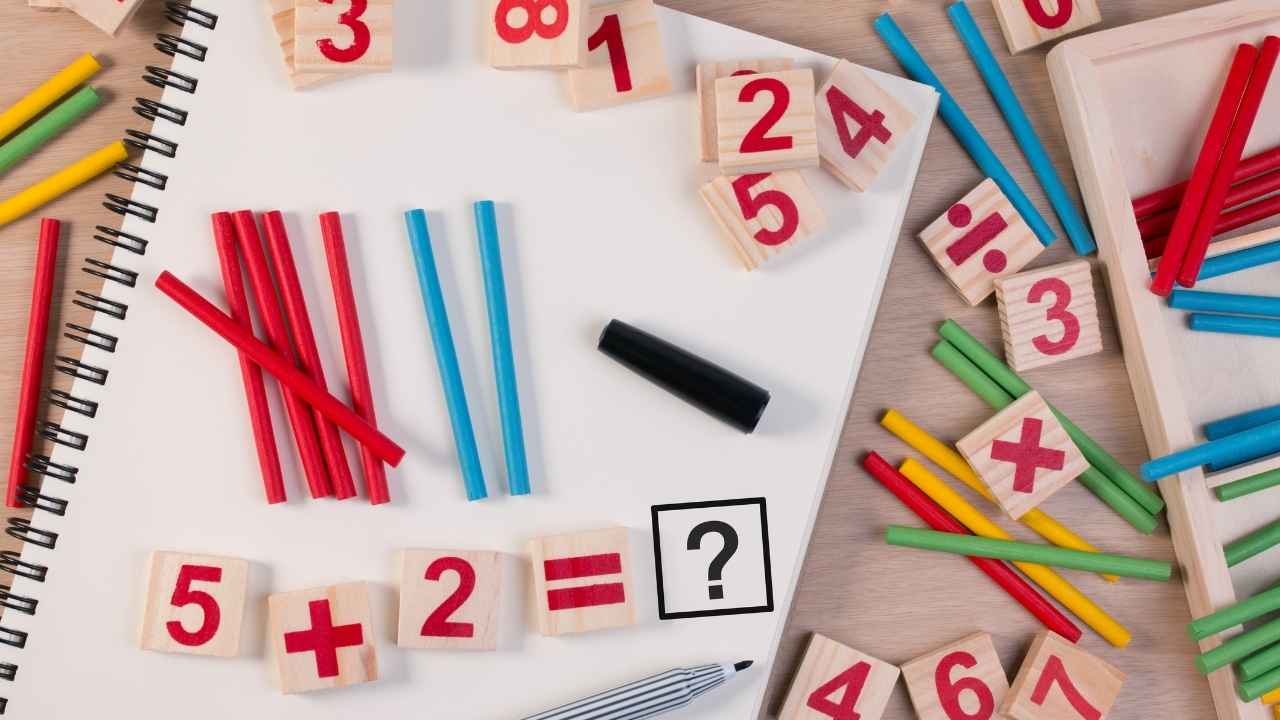
Mathematics is a core subject in every primary school in the United Kingdom. It helps children make sense of numbers, patterns, shapes, and everyday problems. Strong maths skills support learning across the curriculum, including science, computing, and even reading comprehension.
In England, maths teaching is guided by the National Curriculum. Children are expected to develop confidence with number, calculation, reasoning, and problem-solving. Schools aim to build understanding step by step, from simple counting in Key Stage 1 to more advanced topics such as fractions and geometry in Key Stage 2.
For parents and teachers, it can be helpful to understand what is taught at each stage, what progress looks like, and how children are supported when learning becomes challenging. This guide explains KS1 and KS2 expectations clearly, with practical examples for home and classroom use.
The Maths Curriculum in UK Primary Schools
Primary maths in the UK focuses on three main areas:
- Fluency (quick and accurate use of number facts)
- Reasoning (explaining thinking and making connections)
- Problem-solving (using maths in real situations)
Children are encouraged to understand concepts deeply, not just memorise methods. This approach helps pupils apply maths confidently in new contexts.
Maths lessons usually include:
- Whole-class teaching
- Guided practice
- Independent work
- Discussion and explanation
Teachers often use practical resources, drawings, and structured methods before moving to written calculations.
Key Stage 1 (Ages 5–7): Building Strong Foundations
Key Stage 1 includes Year 1 and Year 2. This stage focuses on early number sense and simple calculations.
Children learn best through hands-on activities and clear visual models. Teachers support pupils in developing confidence with counting and basic maths language.
Main KS1 Goals
By the end of KS1, most children should be able to:
- Count forwards and backwards
- Recognise and write numbers to 100
- Add and subtract within 20 confidently
- Understand place value (tens and ones)
Short, regular practice is important at this stage.
Number and Place Value in KS1
Children begin by learning how numbers work. This includes counting objects, comparing numbers, and understanding order.
Example Skills
- Knowing that 15 is made of 1 ten and 5 ones
- Ordering numbers such as 7, 12, 19
- Saying which number is bigger or smaller
Teachers may use:
- Number lines
- Counters
- Base ten blocks
These tools help children “see” numbers clearly.
Addition and Subtraction in Early Years
In KS1, children start with simple number bonds and small calculations.
Common Methods
- Counting on using fingers or number lines
- Using objects to add and take away
- Learning number facts such as 5 + 5 = 10
Children are also taught to understand subtraction as both:
- Taking away
- Finding the difference
Example
If there are 12 apples and 5 are eaten, how many are left?
Children may solve this by counting back or using counters.
Times Tables and Early Multiplication
In Year 2, children begin learning multiplication through grouping and repeated addition.
They explore:
- Counting in 2s, 5s, and 10s
- Sharing objects equally
- Simple arrays (rows and columns)
Example
3 groups of 2 = 2 + 2 + 2 = 6
At this stage, understanding is more important than speed.
Key Stage 2 (Ages 7–11): Developing Skills and Confidence
Key Stage 2 includes Year 3 to Year 6. Maths becomes broader and more challenging.
Children build on KS1 knowledge and move towards more formal methods.
Main areas include:
- Larger numbers and place value
- Written addition, subtraction, multiplication, and division
- Fractions and decimals
- Measurement and geometry
- Reasoning and problem-solving
KS2 prepares pupils for secondary school expectations.
Place Value and Number Knowledge in KS2
Children work with numbers up to at least 1,000,000 by Year 6.
They learn to:
- Read and write large numbers
- Round numbers
- Use negative numbers in context
Example
Round 4,682 to the nearest hundred.
Children must understand place value to do this accurately.
Written Methods for the Four Operations
In KS2, children are taught formal calculation methods.
Addition and Subtraction
Pupils use column methods, often starting with simple examples before moving to larger numbers.
Multiplication
Children move from arrays to written multiplication.
Division
They learn short division and, later, long division.
Progression of Calculation Methods
| Operation | KS1 Approach | KS2 Approach |
|---|---|---|
| Addition | Counting on, number bonds | Column addition |
| Subtraction | Taking away with objects | Column subtraction, exchanging |
| Multiplication | Groups and repeated addition | Written multiplication |
| Division | Sharing equally | Short and long division |
Teachers check that children understand the meaning behind each method.
Fractions, Decimals, and Percentages
Fractions are introduced in KS1 but become a major focus in KS2.
Children learn:
- Fractions of shapes and numbers
- Equivalent fractions
- Adding and subtracting fractions
- Decimals and their link to fractions
- Percentages in Year 5 and 6
Example
1/2 is the same as 2/4.
Pupils often use fraction walls or diagrams to support learning.
Measurement: Maths in Real Life
Measurement helps children apply maths to everyday situations.
Topics include:
- Length, mass, and capacity
- Time and calendars
- Money and budgeting
- Perimeter, area, and volume (later KS2)
Example Activities
- Measuring ingredients in cooking
- Working out the cost of items
- Reading timetables
Measurement is practical but can be tricky if children struggle with units.
Geometry and Shape in Primary Maths
Geometry is taught across both key stages.
Children learn about:
- 2D and 3D shapes
- Symmetry
- Angles (KS2)
- Coordinates
- Position and direction
Example
A right angle is 90 degrees.
Children often enjoy shape work because it is visual and hands-on.

Reasoning and Problem-Solving in Maths Lessons
Modern maths teaching places strong emphasis on reasoning.
Children are encouraged to explain answers using full sentences.
Teachers may ask:
- How do you know?
- Can you prove it?
- Is there another way?
Example Reasoning Question
If 6 × 4 = 24, what is 60 × 4?
This builds deeper understanding, not just quick recall.
Supporting Maths Learning at Home and in School
Parents and teachers both play an important role.
Helpful Home Support
- Practising times tables little and often
- Talking about numbers in daily life
- Encouraging children to explain their thinking
- Using games like cards or dice for number practice
Classroom Support
Teachers may provide:
- Extra small-group teaching
- Visual aids and practical resources
- Differentiated tasks
Support works best when children feel calm and encouraged.
Practice Methods: Benefits and Limitations
Regular practice helps children build fluency, but balance is important.
Benefits
- Builds confidence with key facts
- Improves speed and accuracy
- Helps children remember methods
Limitations
- Too much repetition can feel stressful
- Practice without understanding may cause confusion
- Children may learn rules without meaning
Interactive or game-based activities can sometimes help, especially for reluctant learners, but they should support learning rather than replace teaching.
Key Takeaways
- UK primary maths follows the National Curriculum across KS1 and KS2.
- KS1 focuses on number foundations and simple calculations.
- KS2 develops formal methods, fractions, reasoning, and problem-solving.
- Fluency, reasoning, and real-life application are all important.
- Support at home works best through short, positive practice.
- Practice is useful, but understanding must come first.
Frequently Asked Questions
What should a child know by the end of KS1?
Most children should be confident with numbers to 100, basic addition and subtraction, and simple multiplication through grouping.
When do children learn times tables?
Children begin in KS1 with 2, 5, and 10. By Year 4, pupils are expected to know all tables up to 12 × 12.
Why do schools use different calculation methods?
Methods are taught in steps so children understand concepts before using formal written approaches.
How can parents help without teaching the “wrong way”?
Focusing on number talk, times table practice, and asking children to explain their methods is usually most helpful.
What if a child finds maths difficult?
Extra support, patience, and practical activities can help. Teachers can also provide targeted intervention.
Conclusion
Maths teaching in UK primary schools is carefully structured from KS1 to KS2. Children start with counting, simple number facts, and basic calculations. Over time, they develop stronger fluency, deeper reasoning, and the ability to solve problems using a range of methods.
Understanding the expectations of each key stage can help parents and teachers support children more effectively. With steady practice, clear explanations, and encouragement, most pupils can build the confidence they need to succeed in maths throughout primary school and beyond.